RESEARCHThesis / DissertationOct 4, 2026·60 min read

INSURGENCY IN FLORENCE OKETONA’SASHES IN THE TIMES.
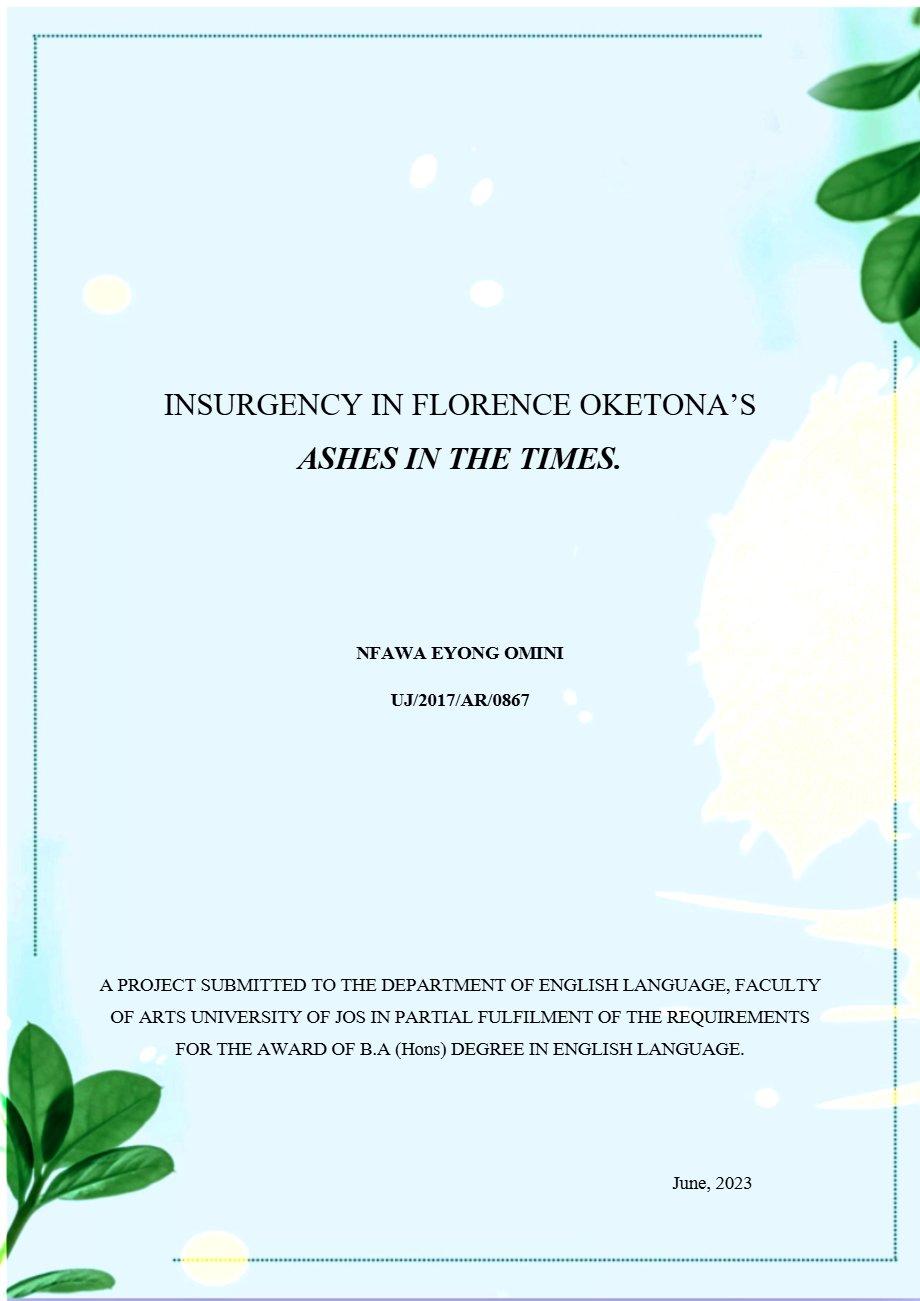
By Omini Nfawa
ABSTRACT
This study examines the portrayal of insurgency in Florence Oketona's novel, Ashes in The Times.The objective is to analyse the impact of the plot, settings, characters, and symbols in depictinginsurgency within the text. The researcher explores how insurgency affects its victims and definesthe characteristics of insurgency, including the mode of operation of insurgents and the role of thegovernment in addressing this issue, as depicted in the text. The study adopts qualitative andanalytic research designs for the analysis, considering the language and symbols used in the text assources of data. The research is guided by the New Historicism theory, which helps identify andanalyse the historical and cultural context that inspired the text. By examining the social andhistorical elements manifested in the text, the study reveals the ineffective security architecture ofNigeria in addressing insecurity. Insurgency is portrayed as a destructive and devastatingphenomenon that must be eradicated due to its negative impact on society. To address the ongoinginsurgency, the government should prioritize good governance, education, and employmentopportunities for the youth and citizens, while equipping and training/retraining the securityforces. Measures should be taken to ban hate speeches and radical messages in places of worship,with perpetrators facing prosecution. Additionally, viable negotiation strategies should be adoptedto engage agitators and find common ground, while reinforcing the Nigerian borders to preventforeign involvement in the crisis.
Download PDFRead on ResearchGate ↗
THE AUTHOR'S RESEARCH PROFILES
ResearchGate ↗ORCID ↗Academia.edu ↗Google Scholar ↗
SHARE
FEATURED BOOK
A CHILD'S CRY IN THE SAVANNAH

A CHILD'S CRY IN THE SAVANNAH

A Novel by Omini Nfawa Eyong

MORE FROM OMINI
The Power of the Pen: Literature as a Tool for Social Change

The Historical Role of African Literature in Social Transformation

African literature's association with social change did not begin with independence, though independence gave it a specific and urgent purpose. Writers working under colonial rule already used the novel and the essay to contest European narratives about African societies; Achebe's decision to write Things Fall Apart, published in 1958 on the eve of Nigerian independence, was itself an act of correction aimed at a colonial literary tradition, from Joseph Conrad to Joyce Cary, that had rendered African societies as static or savage. This corrective impulse recurred across the continent in different registers: in East Africa through Ngũgĩ's early, Gikuyu-inflected fiction, in southern Africa through a literature written directly against apartheid's machinery of racial classification, and in Francophone Africa through the Negritude movement's reclamation of Black cultural dignity. The common thread was not a shared aesthetic but a shared refusal to let the coloniser's account of Africa stand unanswered.

RATINGS & REVIEWS
No ratings yet — be the first.
Reviewing as a guest. Have an account?

No written reviews yet.

COMMENTS
0 COMMENTS
Commenting as a guest. Have an account?

No comments yet — be the first.

NEWSLETTER
New writing and book news, occasionally.