The Power of the Pen: Literature as a Tool for Social Change
This essay examines the claim that African literature functions as an instrument of social change, tracing that claim from Chinua Achebe's account of the novelist as teacher and Ngũgĩ wa Thiong'o's argument for linguistic decolonisation through to Ben Okri's climate writing, Fela Anikulapo Kuti's protest music, and a body of contemporary Nigerian fiction, Ayotunde Mamudu's Drift Wood, Jude Dibia's Unbridled and Ndidi Chiazor-Enenmor's If They Tell the Story, that confronts the sexual and domestic abuse of women and girls. Rather than surveying the field exhaustively, the paper applies three theoretical frameworks in depth, postcolonial theory, Marxist and cultural materialist criticism, and decolonial theory, and organises its literature review thematically around resistance, language, institutional infrastructure and the literature of exposure. It gives sustained attention to a genuine scholarly disagreement, between Taiwo Adetunji Osinubi and Olakunle George, over how directly literature can be said to produce political change, using that disagreement to test rather than merely illustrate its central claim. The paper concludes that African literature's social agency operates chiefly through the formation of readers' consciousness rather than through direct political mechanism, and that this indirect agency remains a legitimate and necessary form of civic infrastructure.

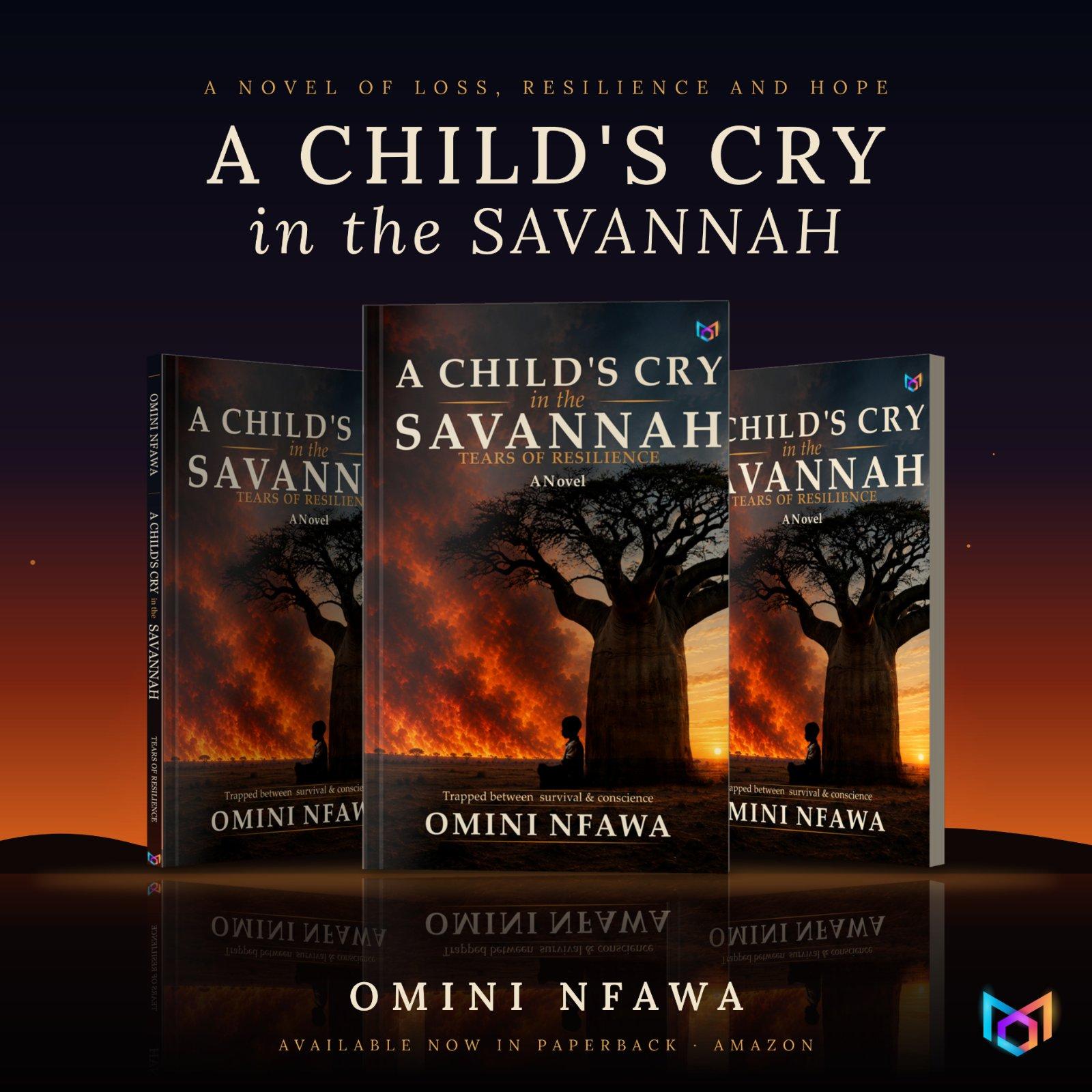
A CHILD'S CRY IN THE SAVANNAH
A CHILD'S CRY IN THE SAVANNAH A Novel by Omini Nfawa Eyong A father can teach his son to survive an ordinary life, but no father is ever given enough warning, or enough time, to teach him how to survive the night his…
The project titled "Insurgency in Florence Oketona's Ashes in The Times" by Nfawa Eyong Omini is a study that investigates the portrayal of insurgency in the selected text. The study aims to identify and discuss how the plot, setting, characters, and symbolism are portrayed and handled in the recreation of insurgency in the text. The research identified and discussed how insurgency affects victims, as well as what constitutes insurgency, insurgents’ mode of operation, and the role of government in tackling insurgency as depicted in the text as it reflects the present reality. The qualitative and analytic research designs were adopted for the analysis. The study was guided by New Historicism theory, which enabled the researcher to identify and analyze the historical and cultural conditions that inspired the text. The theory helped the researcher to read the text putting into consideration the text contexts as it manifests social and historical moments.