A Day in the Life of a Football Coach: The Tactics, The Players, The Pressure and The Blame
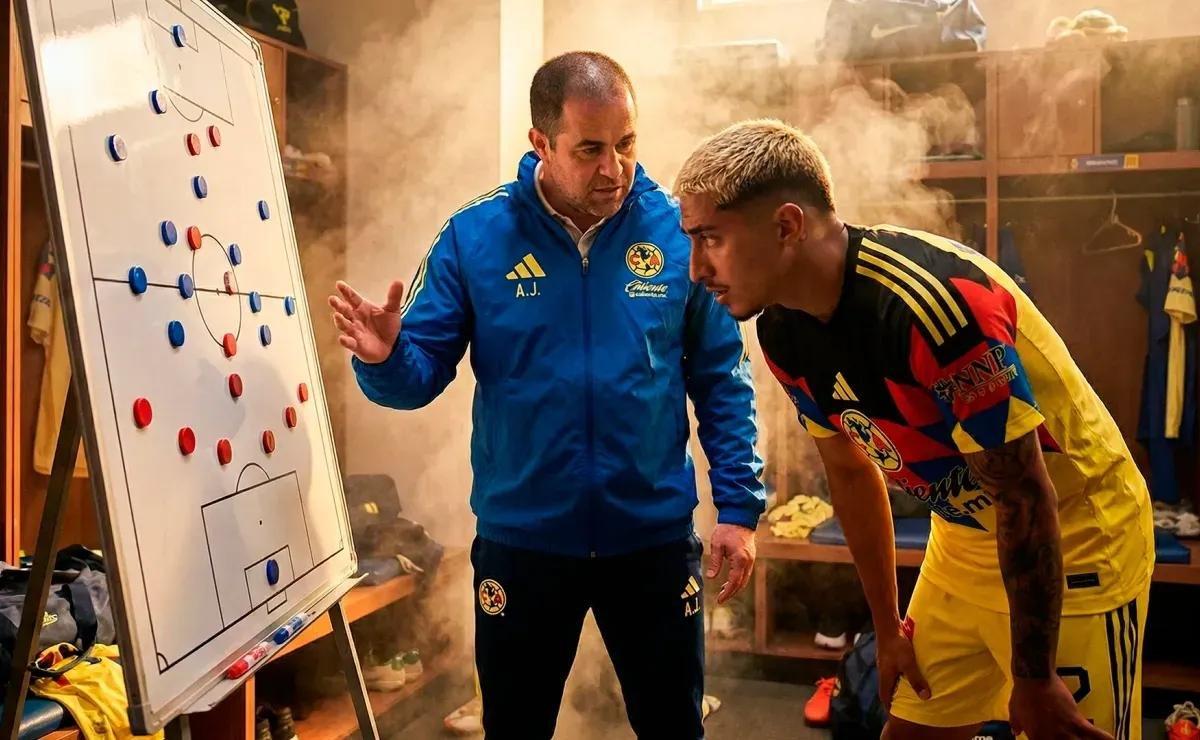
Football, leadership, tactical decisions, player discipline and the politics of managerial accountability.
There is something almost theatrical about the life of a football coach. On Saturday afternoon, he can be celebrated as a genius for making one substitution. By Sunday evening, the same man may be described as tactically clueless, stubborn, outdated and unfit for the job.
Football has a peculiar way of distributing glory and blame. When a team wins, the players are heroes, the supporters are delighted, the board takes credit for its recruitment strategy and the manager is praised for his tactical intelligence. When the same team loses, the conversation changes. Suddenly, the manager cannot motivate his players. His tactics are wrong. His substitutions are questionable. His dressing room is divided. His future is uncertain.
But what happens to the eleven men who walked onto the pitch? What happens to the midfielder who misplaced fifteen passes, the striker who missed three clear chances, the defender who switched off at a corner or the winger who refused to track back?
Apparently, the coach must explain everything.
This raises one of football's most uncomfortable questions: when a team consistently underperforms, why is the person responsible for preparing the players so often the first to lose his job?
This is not an argument for protecting coaches from criticism. Some deserve to be dismissed. Some make poor decisions, mismanage talented squads, lose dressing rooms, persist with ineffective tactics and refuse to adapt. Others simply reach the end of their useful time at a club.
However, there is a difference between holding a coach accountable and making him responsible for everybody else's failure.
To understand that difference, we need to examine the work of a football coach, distinguish between coaching and management, enter the dressing room, visit the training ground and take a look inside the boardroom. We will also make a few stops at Old Trafford and Stamford Bridge, because Manchester United and Chelsea have enough managerial history to contribute to this conversation.
1. Who exactly is a football coach?
A football coach is a trained professional responsible for developing players and preparing a team to perform effectively in competitive football.
The job goes beyond telling players to run, pass, shoot and defend. A coach must understand why players should perform certain actions, when they should perform them, where they should position themselves and how the opposition might respond.
Consider a team playing against an opponent that uses a high defensive line. The coach notices that the opposition's centre-backs struggle to defend balls played behind them. He studies their movement, identifies the available spaces and instructs his attacking players to make diagonal runs.
During training, he creates exercises that reproduce those situations. He explains the timing of the runs, the passing angles and the movement required from the midfielders.
On matchday, he expects his players to recognise those opportunities and execute what they have practised.
That is coaching.
It involves observation, instruction, correction, repetition, evaluation and adaptation.
A good coach does not merely tell a player what went wrong. He identifies the technical or tactical reason for the mistake and works towards correcting it.
If a right-back repeatedly leaves space behind him, the coach must determine whether the problem is poor positioning, slow recovery, a misunderstanding with the centre-back, an inappropriate tactical instruction or simply a lack of ability.
The solution depends on the diagnosis.
This is why coaching requires both technical knowledge and an understanding of human behaviour. It is not enough to understand football. A coach must also understand footballers.
The different types of football coaches
Professional football is not a one-man classroom. Modern clubs employ technical teams with different areas of responsibility.
Head coach: Oversees first-team performance, tactics, selection and training.
Assistant coach: Supports training plans, tactical preparation and implementation.
Goalkeeping coach: Develops goalkeepers' technical and tactical abilities.
Fitness and conditioning coach: Handles physical preparation and conditioning.
Set-piece coach: Works on attacking and defensive set-piece organisation.
Performance analyst: Studies team performances, opponents and tactical patterns.
Medical and rehabilitation staff: Manage injuries, recovery and players' return to competition.
Mental performance specialist: Supports psychological preparation and performance.
These responsibilities can overlap depending on the club's structure and resources.
The head coach must ensure that the different departments work towards the same footballing objectives. He does not necessarily possess every technical skill within the team, but he must know how to bring the different specialists together.
2. Coach versus manager: Are they actually the same person?
Football supporters routinely use the words coach and manager interchangeably. In everyday conversation, that is understandable. However, professional football administration has increasingly distinguished between the two roles.
A head coach is primarily concerned with the team's performance. A manager traditionally has broader responsibilities for the club's football operations.
The head coach concentrates on preparing the team, developing players, selecting the starting eleven, implementing tactics and making matchday decisions.
The manager may perform all these duties while also having considerable influence over recruitment, player contracts, staff appointments, scouting and the general direction of the football department.
The distinction matters because not every coach has the authority to decide which players the club buys.
The Sir Alex Ferguson model
Consider Sir Alex Ferguson at Manchester United.
Ferguson was not simply a man who arrived at the training ground, conducted a session and selected eleven players for Saturday's match.
He exercised considerable authority over the club's footballing direction. He influenced recruitment, player development, discipline, staff appointments and the culture of the first team.
He built teams across different generations, dealt with difficult personalities and made decisions about players who were no longer serving the club's ambitions.
His authority was such that even established stars could find themselves outside the project if they challenged his standards.
David Beckham's departure to Real Madrid in 2003 remains a notable example.
The Arsène Wenger model
Arsène Wenger at Arsenal was another manager with extensive responsibilities.
Beyond tactics and team selection, Wenger influenced recruitment, training methods, player development, the club's footballing philosophy and long-term planning.
His work was not restricted to the ninety minutes on a football pitch. He helped establish an identity that produced teams capable of competing at the highest level.
The 2003/04 Invincibles season remains one of the remarkable achievements in English football.
The modern head coach model
Today, many clubs operate differently.
The owner or board appoints a sporting director. The sporting director works with recruitment staff, analysts and other departments. The head coach is then appointed to implement the club's footballing philosophy and improve the first team.
This arrangement can work very well.
It can also create serious problems when the head coach is expected to deliver results using players he did not select.
Imagine being appointed to lead a football team, only to discover that the people who hired you have already decided which players you must use, which positions you cannot recruit for and which tactical system you must follow.
You are expected to win, but your authority over the resources required to win is limited.
That is an uncomfortable arrangement.
A sporting director cannot score goals. A head coach cannot single-handedly manage every financial, commercial and recruitment decision.
Both positions are important, but their responsibilities must be clearly defined.
You cannot give somebody responsibility for delivering results while withholding the authority to make the decisions necessary to achieve them.
3. A day in the life of a football coach
Let us imagine that we are following the head coach of a Premier League club during a normal match week.
The team played on Sunday. The next fixture is Saturday. The coach has six days to prepare his players.
What does his working week look like?
The exact schedule varies according to the club, competition calendar, travel arrangements, player fitness and coaching philosophy. However, the following gives an idea of the responsibilities involved.
6:30 AM: The day begins before the players arrive
The coach checks the latest team reports and considers developments from the previous match.
His concerns may include injury updates, fitness reports, information about the next opponent, training objectives, player availability and tactical observations.
Football at the professional level does not stop when the final whistle blows.
A coach may watch the previous match several times, identifying patterns that were difficult to notice from the touchline.
Perhaps the team conceded because the midfield was too stretched. Perhaps the centre-forward was isolated. Perhaps the opposition repeatedly exploited the space between the left-back and the left centre-back.
These are the details that occupy his attention.
8:00 AM: The technical team meeting
The coach meets his assistants, analysts, fitness specialists and medical personnel.
They discuss the squad, training priorities and the tactical requirements of the upcoming fixture.
A fitness coach may recommend reduced physical intensity for certain players. A medical officer may report that a defender is not ready for full contact. An analyst may have identified a weakness in the opponent's defensive organisation.
The head coach must consider all these contributions before deciding what happens on the pitch.
A poor coach may ignore useful information because he believes he knows everything.
A good coach understands that leadership does not mean possessing every answer. It means knowing how to assemble the right people and use their knowledge.
9:30 AM: Training begins
The players arrive for training.
Some are cheerful. Others look tired. A few may still be carrying the disappointment of a poor performance.
The coach explains the day's objectives.
Depending on the match schedule, training could include:
Passing and ball retention.
Positional play.
Pressing exercises.
Defensive organisation.
Attacking transitions.
Finishing drills.
Set-piece routines.
Small-sided games.
Tactical rehearsals.
The coach watches closely.
He is not merely interested in whether a player completes a pass. He wants to understand the decision behind it.
Did the player scan before receiving the ball? Did he recognise the passing option? Was his body positioned correctly? Did he make the right decision under pressure?
A player can complete ten consecutive passes and still fail to understand the tactical purpose of the exercise.
The coach must identify that difference.
11:30 AM: Individual conversations
This is where the psychological aspect of coaching becomes important.
One player may need encouragement. Another may require correction. A young academy graduate may need reassurance after making a mistake.
A senior player might need to be reminded that his reputation does not exempt him from responsibility.
Consider a young winger who performs well in training but appears nervous during matches. The coach may speak to him privately, explain what he expects and remind him that mistakes are part of development.
Now consider an experienced striker who repeatedly arrives late, ignores instructions and refuses to make the defensive runs required by the system.
That conversation will be different.
Coaching is not about treating every player identically. It is about maintaining consistent standards while recognising that different individuals require different approaches.
12:30 PM: Tactical analysis
The coach and his analysts review footage of the next opponent.
They examine formations, defensive structures, attacking movements and weaknesses.
They may ask:
Does the opponent press high or defend deep?
Which side does its attack favour?
Does its defensive midfielder protect the centre-backs effectively?
How does it defend corners?
Does it leave space behind its full-backs?
Which players are vulnerable under pressure?
The coach then develops a tactical plan.
However, identifying a weakness and exploiting it are two different things.
A coach may correctly identify that an opponent struggles against quick transitions but still lack the players required to exploit that weakness.
Tactics must fit the available personnel.
A coach who insists on playing possession football with players who cannot retain possession under pressure may be creating his own problems.
Similarly, a team built around quick counter-attacks may struggle if its manager insists on slow, elaborate build-up play.
2:00 PM: Recruitment and squad management
Depending on his authority, the coach may attend meetings concerning recruitment, contracts, academy development and squad planning.
He may consider players approaching the end of their contracts, potential loan arrangements, young players ready for promotion, positions requiring reinforcement and individuals who no longer suit the system.
The coach must balance immediate results with long-term squad development.
This is not always easy, particularly at clubs where owners and supporters expect instant success.
4:00 PM: Reviewing the training session
The coach evaluates the session.
Who performed well? Who failed to follow instructions? Who needs additional work? Who may not be physically ready for the next match?
He may speak with individual players or ask his assistants to work on specific weaknesses.
The session is followed by another review with the technical team.
6:00 PM: The work continues
For the supporters, training may be over.
For the coach, the day may not be finished.
There are interviews, press obligations, further analysis, tactical adjustments and preparations for the next training session.
He may go home knowing that a single defensive error could determine whether he keeps his job.
Football management is a profession in which the working day rarely ends with the closing of the office door.
And Saturday is coming.
4. The qualities of a good football coach
Not every former footballer becomes a good coach. Neither does every tactically intelligent individual have the ability to manage a dressing room.
Playing football and coaching football require different abilities.
A player may possess extraordinary technical talent but struggle to explain the game to others. Another person may have had an ordinary playing career but develop into an excellent coach.
Some of the qualities required include:
Tactical intelligence
A coach must understand formations, movement, positioning, transitions, pressing, defensive organisation and the relationship between different areas of the pitch.
He must also recognise that football is dynamic. A formation written on paper is not necessarily the formation a team uses throughout a match.
Communication
A coach must communicate complex ideas in language players understand.
It is one thing to know what needs to happen. It is another to explain it clearly enough for twenty-five different individuals to execute it.
Emotional intelligence
A dressing room contains different personalities, ambitions, backgrounds, egos and expectations.
Some players respond to criticism. Others require encouragement. Some need greater responsibility, while others need firmer boundaries.
A good coach understands people.
Discipline
Standards must apply to everybody.
A young academy player should not be punished for arriving late while a senior international receives special treatment.
Once players realise that rules are optional for certain individuals, the coach's authority begins to weaken.
Adaptability
A coach must be prepared to change his approach when circumstances demand it.
There is nothing intelligent about continuing to use a failing system simply because it worked three seasons ago.
Courage
A coach must sometimes make unpopular decisions.
Dropping a captain, substituting a star player or leaving an expensive signing on the bench may be necessary.
He must be prepared to make those decisions even when the player involved has considerable influence.
Player development
A good coach should improve players.
If a midfielder arrives at a club unable to recognise space and leaves with a better understanding of positioning, movement and decision-making, the coaching staff have contributed to his development.
Accountability
A coach must accept responsibility for his decisions.
Blaming referees, players, injuries and bad luck after every defeat is not leadership.
Sometimes the opposition is better. Sometimes the tactics were wrong. Sometimes the coach simply got it wrong.
He must be able to say so.
5. When the coach gets it right: The genius behind the result
There are moments in football when a coach's influence becomes impossible to ignore.
A team that previously looked disorganised suddenly becomes difficult to beat. Players who appeared ordinary begin performing beyond expectations. A striker starts scoring regularly. A struggling defender becomes dependable. The entire team develops an identity.
What has changed?
Often, the coach has changed the way the players understand the game.
José Mourinho: Building a winning Chelsea
When José Mourinho arrived at Stamford Bridge in 2004, he inherited a club with significant financial backing and considerable ambition.
He also had an extraordinary group of players.
Frank Lampard, John Terry, Didier Drogba, Claude Makélélé, Petr Čech, Ricardo Carvalho, Arjen Robben and others formed the foundation of a team that would dominate English football.
Mourinho did not simply assemble talented individuals. He developed a team with a strong defensive structure, an organised midfield, physical intensity and an impressive understanding of collective responsibility.
Chelsea conceded only 15 league goals in the 2004/05 Premier League season, winning the title with 95 points.
That defensive record remains one of the defining achievements of the Premier League era.
Was Mourinho responsible for every goal scored? Of course not. Did he personally make every tackle? No.
But he established a system in which the players understood their responsibilities and performed them consistently.
The coach had a vision. The players executed it. The club provided the resources.
Everybody contributed.
Pep Guardiola: Coaching beyond selecting talented players
Pep Guardiola offers another example.
At Barcelona, Bayern Munich and Manchester City, his teams have demonstrated how coaching can influence the way football is played.
His approach involves positional play, coordinated movement, controlled possession, pressing and the creation of numerical advantages in specific areas of the pitch.
A midfielder in Guardiola's system is not simply expected to receive and pass the ball. He must recognise when to move, when to remain in position, when to create space for a teammate and when to accelerate the attack.
This is why his teams often look so organised.
The football may sometimes appear repetitive to critics, but repetition is part of the coaching philosophy.
There is a method behind the movement.
Jürgen Klopp: Turning mentality into a footballing weapon
Liverpool under Jürgen Klopp offers another important case study.
When Klopp arrived at Anfield in 2015, Liverpool were not yet the dominant force they would become.
He gradually developed a team built around intense pressing, quick transitions, collective effort and emotional commitment.
Players such as Mohamed Salah, Sadio Mané, Roberto Firmino, Jordan Henderson, Virgil van Dijk and Trent Alexander-Arnold became central to that project.
Klopp's approach to pressing was not simply about running after the ball. It was about coordinating pressure, forcing opponents into mistakes and turning defensive situations into attacking opportunities.
Liverpool eventually won the Champions League in 2019 and the Premier League in 2019/20, their first English
Filed under: Opinion, Football
- A day in the life of a football coach
- Football
- Football Managers
- Coaching
- Premier League
- Chelsea FC
- Manchester United
- Liverpool
- Player Accountability
- Sports Management.
No comments yet. Be the first.