Amos Tutuola's Palm-Wine Drinkard: Genius, or Mocked Unfairly?
In 1952 a Nigerian writer broke every rule of Standard English and won over British critics. Back home, many were mortified. Who was right?
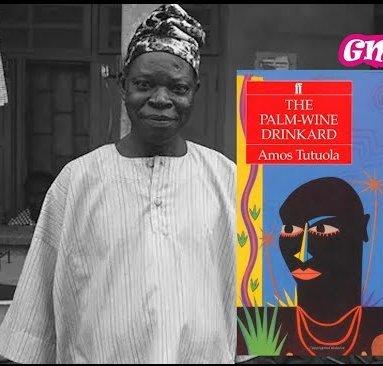
Amos Tutuola's Palm-Wine Drinkard: Genius, or Mocked Unfairly?
Let me confess something first. Somewhere in a folder from my undergraduate days sits an assignment I wrote for a stylistics class, all about Amos Tutuola. Our lecturer was Prof Ahidjo, a man who could make you defend a comma as if your life depended on it. If your analysis was sloppy, he looked at you over his glasses in a way that made you reconsider your entire career path. I do not remember the grade I got, and I have decided that some things are better left unconfirmed. I am going with distinction. Prof, you are welcome to correct me.
Now to the real story.
A drinker, a dead tapster, and a journey
The Palm-Wine Drinkard was published in 1952 and is widely described as the first African novel in English published outside Africa. Its hero is a man whose days are devoted to palm wine. When his personal tapster dies, he sets off for the Deads' Town to bring him back, and meets a parade of spirits and monsters along the way, including the Complete Gentleman.
This was not bad grammar
What shocked readers was the language. Tutuola wrote in a modified English, closer to how a Yoruba speaker thinks than to the Queen's English. Stylisticians call the deliberate bending of language rules deviation or foregrounding. Geoffrey Leech and Mick Short argue that a truly creative writer often has to be destructive of rules, conventions and expectations, and Tutuola is a textbook case.
Three things stood out in my old assignment.
First, the vocabulary. He coined the word drinkard because standard English offered no neat word for someone who drinks constantly and never quite gets drunk. Words like juju carry a meaning that English simply lacks a close equivalent for.
Second, the exaggeration. His narrator's father gives him a palm farm nine miles square, with 560,000 trees, and a tapster who taps 150 kegs every morning, all of which the narrator finishes before two in the afternoon. No farm works like that. The numbers are drama, in the way a grandfather's fish grows to the size of a canoe with every retelling.
Third, the thought patterns. Many Nigerians still say that they "hear" a smell, because in several Nigerian languages the same verb covers both. Tutuola let that structure stand in his English rather than tidying it away.
Genius abroad, embarrassment at home?
The reception is where it gets interesting, because the usual summary is not quite right. The poet Dylan Thomas reviewed the book warmly, calling it brief, thronged, grisly and bewitching, and that praise helped launch Tutuola internationally. But Western critics did not stay united. Some who followed Thomas dismissed the book as primitive or naive. Meanwhile, many Nigerian intellectuals of the time were uneasy, feeling that its non standard English and its tales of spirits and heavy drinking played into the worst European stereotypes about Africans. Others complained that his retellings of Yoruba tales were weaker than the originals, and that he leaned too much on the earlier work of D.O. Fagunwa, who wrote in Yoruba.
So it was not simply a case of Europe loving him and Nigeria rejecting him. It was a deeper quarrel about who gets to decide what counts as proper literary English, and what an African writer is supposed to sound like.
A fair verdict
Chinua Achebe later observed that Tutuola's art conceals, or rather clothes, its purpose, as all good art must. I think that is the fairest summary. Tutuola's English is not an assemblage of errors, because those choices fit his character and his world. His fellow Nigerian writer Gabriel Okara did something similar in The Voice, carrying Ijaw word order and idiom into English on purpose. Critics have also pointed out, fairly, that the book has loose and uneven stretches. A distinctive voice is not the same as a flawless one.
Did Tutuola fail English, or did English fail to contain him? I still think about that question, usually right around the moment I remember I never confirmed my own grade.
Filed under: Entertainment and Culture, Lifestyle and Society, Belief and Sacred Spaces, Reviews, Books and Literature, Books
- Amos Tutuola
- The Palm-Wine Drinkard
- Yoruba literature
- stylistics
- Nigerian English
- foregrounding"
No comments yet. Be the first.