Mami Wata: Water Goddess or Memory of Foreign Ships?
She is worshipped across Africa, but her image stitches together older water spirits, European mermaids, a Hamburg circus poster and Hindu art.
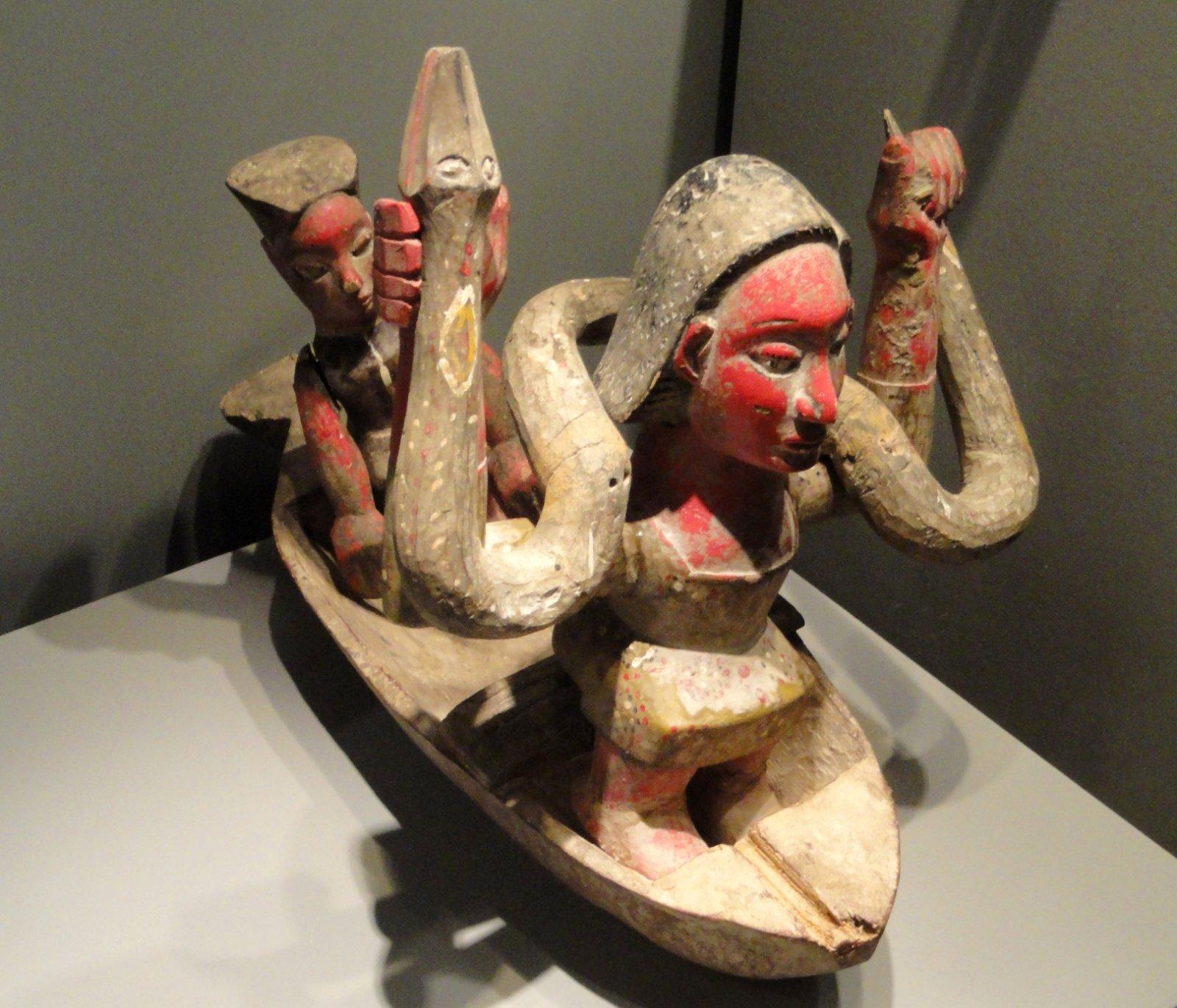
Image: Daderot
Mami Wata: Water Goddess or Memory of Foreign Ships?
Many of us grew up with some version of the warning. Do not go to the river alone after dark, because Mami Wata might take you. Some versions add that if she does, she may send you home rich, and a little changed.
The name is Pidgin English, Mammy Water, and that is already a clue. A figure with a name like that did not simply rise from the river unchanged out of the ancient past. She has a more tangled story, and the more you look at it, the better it gets.
One name, many rivers
Mami Wata is known in parts of West, Central, East and Southern Africa as a water spirit, mermaid or goddess. In many places she is described as a beautiful and dangerous woman, associated with wealth, healing and the power to turn lives upside down. Her devotees often give her gifts that are foreign and luxurious, such as beads, fine cloth and perfume, according to museum records of her shrines.
Art historian Henry John Drewal, who has studied her worship for decades and curated a major exhibition on her, argues that her image has been profoundly shaped by several sources: much older African water spirits, European mermaids, snake charmers, Hindu deities, and Christian and Muslim saints.
The fifteenth century
Drewal and other scholars trace a part of her story to the first meetings of Africans and Europeans in the fifteenth century. European ships arrived with carved figures and images of mermaids, and West Africans, who already honoured powerful water spirits, took those images into their own understanding of the world. One ship's figurehead from the eighteenth or nineteenth century, kept in Ijebu-Ode in Nigeria, is called Mami Wata by the people who care for it.
So the question in the title has a partial yes. Foreign ships did leave a mark on her. But she did not come only from the ships, because the water spirits she joined were already here.
The poster from Hamburg
The most surprising chapter comes later. In the second half of the nineteenth century, a German chromolithograph of a woman handling snakes began to circulate in Africa. Drewal traced its origin to a poster printed in Hamburg for a circus show, with a performer known as Maladamatjaute or Nala Damajanti said to have been the model. Not every scholar agrees on every detail, but the broad picture is widely accepted: a European print of a snake charmer, carried by traders and sailors, became the face of Mami Wata for a great many people.
Drewal found its influence in forty one cultures across fourteen African countries. Carvers and painters copied the image, local sculptors reworked it, and snakes, which were already ancient symbols of African water spirits, fitted it perfectly.
Hindu gods and an Indian calendar
The borrowing did not stop there. From the 1940s and 1950s, Hindu religious prints from Indian merchants, and images from Indian films, began to influence Mami Wata imagery along the Ghana to Nigeria coast. In some places a male counterpart, called Papi Wata, is pictured with features borrowed from the Hindu deity Hanuman. The Smithsonian's National Museum of African Art notes that the snake charmer image was also reprinted in a 1950s calendar from an Indian company that was widely circulated in West and Central Africa.
A Port Harcourt market even sold figures of her in the 1980s, and the Efik, the Ewe and many other peoples have made her their own.
Her place in Nigerian life
In Nigeria she has been sung about, carved and preached against. Sir Victor Uwaifo mentioned her in his 1967 song "Guitar Boy", advising listeners not to run if they meet her. Some Christian circles treat her as a demon. Her devotees, on the other hand, turn to her for healing of both body and spirit, and, as Drewal notes, she has offered women a way to claim agency in societies that are often dominated by men.
So what is she?
A water goddess, a stranger's mermaid, a circus poster, a Hindu print, an ancestor of the river? The honest scholarly answer is that she is all of these, layered over each other. Mami Wata is what happens when a deeply African idea meets the world and decides to keep what is useful.
That might be the most interesting thing about her. We often ask whether a belief is authentic or borrowed, as if the two cannot live together. Here is a spirit who suggests they always have.
Filed under: Global Mysteries, Forgotten History
- Nigerian folklore
- Mami Wata
- water spirits
- West African religion
- Henry Drewal
- mermaid
No comments yet. Be the first.