The Bermuda Triangle: Mystery or a Story That Kept Getting Retold?
Flight 19, the USS Cyclops and a trail of exaggerations. What insurers, the Coast Guard and a librarian found when they checked the claims.
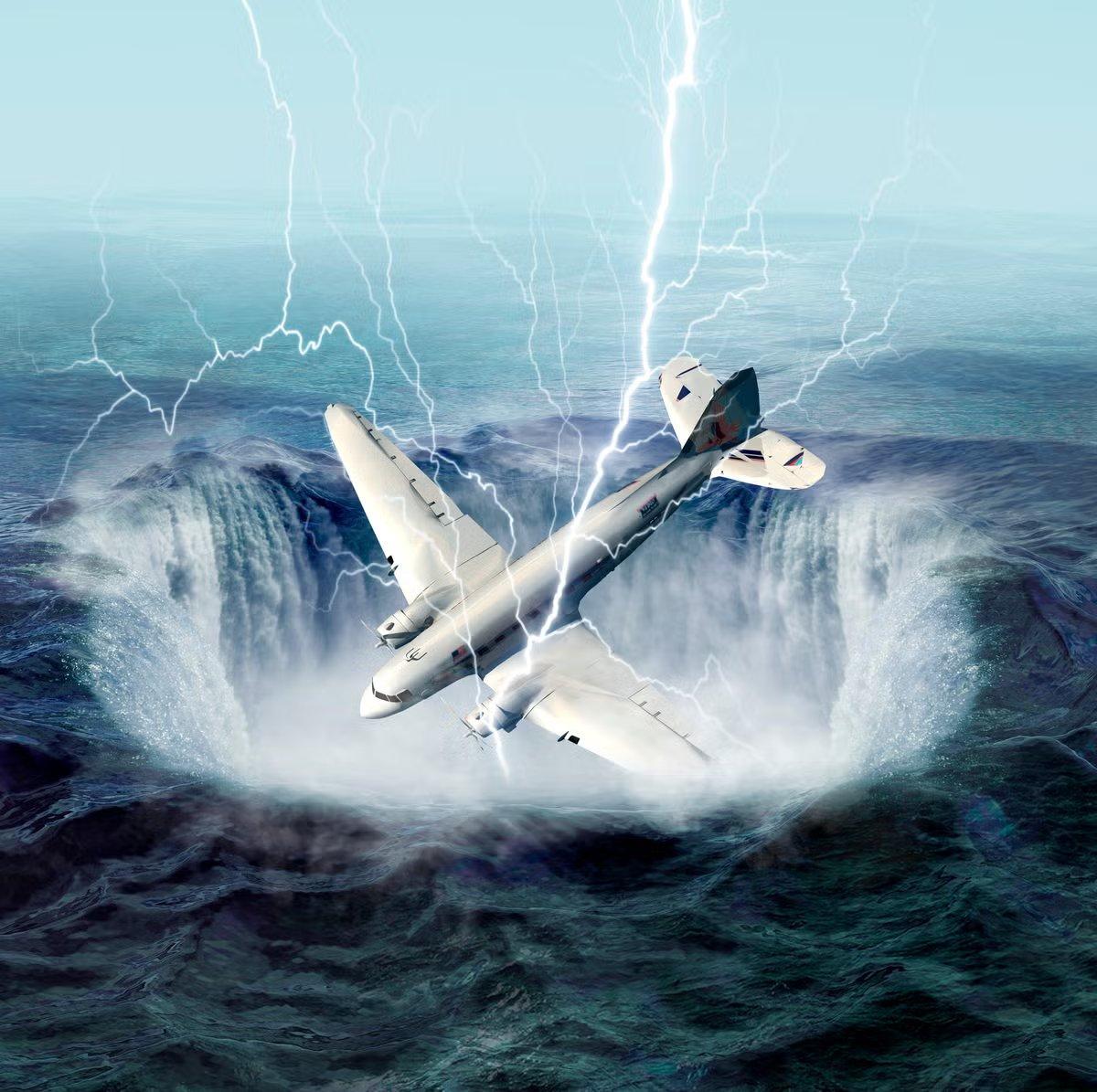
The Bermuda Triangle: Mystery or a Story That Kept Getting Retold?
We know how this works in Nigeria. A story told once at a burial is a rumour. Told three times, with a few details added by each person, it becomes history. The Bermuda Triangle may be the most famous example of that process in the world.
How the legend was built
The idea did not appear all at once. A 1950 newspaper article linked several vanished ships and planes to one stretch of the Atlantic. In 1952, Fate magazine carried an article by George X. Sand about the loss of Flight 19, a group of five US Navy torpedo bombers, and was the first to suggest a supernatural element. In 1964, Vincent Gaddis wrote about "The Deadly Bermuda Triangle" in Argosy magazine, arguing that a pattern of strange disappearances stretched back to at least 1840. More books followed, among them Charles Berlitz's bestselling The Bermuda Triangle in 1974. By 1977, Steven Spielberg was using Flight 19 as an element in Close Encounters of the Third Kind.
Notice something about this chain. Each writer built on the last, and each account added a little to the one before.
Two famous cases
Flight 19 is the centrepiece. Five Avenger torpedo bombers took off from the US Naval Air Station at Fort Lauderdale on 5 December 1945 for a training exercise, and never returned. It was a few months after the end of the Second World War, with Navy aviators still being trained. Researchers who have gone back through the records, including the Australian science writer Karl Kruszelnicki, point to poor weather and pilot error rather than anything supernatural.
The USS Cyclops is the other pillar. This Navy cargo ship, loaded with manganese ore and carrying a crew of more than 300, disappeared in March 1918 after leaving Barbados. No distress call was sent, and no wreckage was ever found. It remains a genuine, sad mystery, but a missing ship in the era of heavy cargo, wartime pressure and Atlantic storms is not by itself an unnatural event.
The librarian who checked
The turning point came in 1975, when Lawrence David Kusche, a research librarian at Arizona State University, published The Bermuda Triangle Mystery: Solved. Kusche did something the legend's promoters had not. He went back to original sources, including Coast Guard records, weather records, newspapers and shipping records.
What he found was a pattern of exaggeration. Many of the incidents turned out to have happened in storms, or outside the supposed area, or to be impossible to verify at all. In one case, a ship said to have vanished had actually sailed from a port of the same name on the Pacific coast. In another, involving the tanker V.A. Fogg, a writer claimed that every body had vanished except the captain. In truth, the Coast Guard photographed the wreck and recovered several bodies, and the ship had sunk off the coast of Texas, nowhere near the usual boundaries of the Triangle.
And the boundaries themselves are a problem. Different writers draw the Triangle in different places, and one even stretched it as far as the coast of Ireland. Which accidents count as "in the Triangle" depends on who is telling the story.
What the insurers said
Perhaps the best test is money. If ships were vanishing in unusual numbers, the insurance market would charge more. Lloyd's of London was asked about this more than once, including by Fate magazine in 1975 and again for a 1992 television programme, and concluded that the area did not see an unusual number of losses. Lloyd's does not charge higher rates for crossing it. The US Coast Guard's records support the same conclusion. A 2013 study listing the world's most dangerous waters for shipping did not feature the region.
The Coast Guard has even said, in a joint statement with the Naval Historical Center, that it is not impressed by supernatural explanations of disasters at sea.
So is there nothing there?
There is something, and it is ordinary. The Triangle sits on busy shipping and flying routes, so any accident rate has a lot of traffic behind it. The Gulf Stream can be powerful, and storms can build quickly. Real ships and aircraft are lost there, as they are everywhere in the world.
What is missing is the mystery itself. The evidence does not show that the Bermuda Triangle is more dangerous than other crowded stretches of ocean.
That does not make the story worthless. It is a wonderful case study in how a legend grows, with a real tragedy at the centre and a chain of retellings around it. Which stories in your own life have grown that way, passed along so many times that nobody remembers who checked the first one?
Filed under: Science Fiction, Futures and Speculation
- Bermuda Triangle
- Flight 19
- USS Cyclops
- Lawrence Kusche
- Lloyd's of London
- mysteries
No comments yet. Be the first.