Why Your Brain Feels Fear Before It Knows the Facts"
A rope at dusk, a shape at the forest's edge. The brain's fast alarm fires well before conscious recognition catches up, and that tells us a lot about fear.
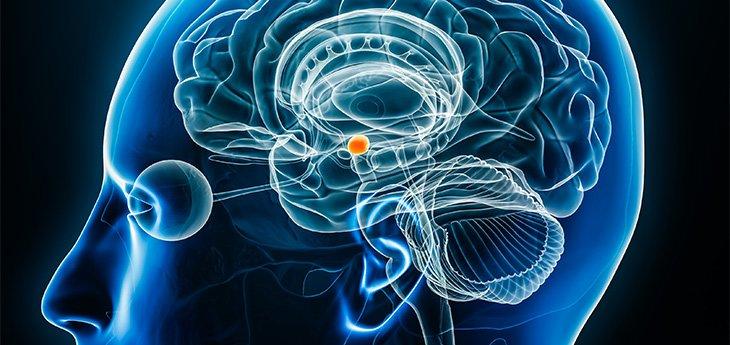
Image: health.ucdavis.edu
Why Your Brain Feels Fear Before It Knows the Facts
You are walking home at dusk, and your foot lands beside something long and curved on the path. Before you have decided whether it is a rope or a snake, your body has already jumped. Your heart is racing. Only afterwards, in a calmer second, does your mind say, "Ah, it was a rope."
That order, body first and explanation later, is not a flaw in you. It is how the brain handles danger.
Two roads to the same alarm
The neuroscientist Joseph LeDoux, who has spent decades studying fear, helped popularise a simple picture of what happens. When something frightening reaches your senses, the signal splits. One route goes from the sensory thalamus, a relay station in the brain, straight to the amygdala, the structure that sounds the alarm. LeDoux called this the low road. It is fast and crude, and it carries little detail about what the thing actually is.
The second route goes from the thalamus up to the cortex, where the brain works out what it is looking at in detail, and only then on to the amygdala. This high road is slower and more accurate. The two run at the same time, but the amygdala hears from the short one first.
LeDoux has put numbers on the gap. By the figures he has cited, a threatening signal can reach the amygdala in about 12 milliseconds, while becoming consciously aware of something takes in the region of 250 to 300 milliseconds. In human brain studies, responses in the amygdala to fear-relevant images have been recorded within roughly 40 to 120 milliseconds, again well ahead of conscious recognition.
The brutal arithmetic of survival
Why would a brain be built this way? Think about the costs. If you mistake a rope for a snake, you lose a second and some dignity. If you mistake a snake for a rope, you may lose a great deal more. A system that reacts first and checks later will sometimes embarrass you, but it is far better at keeping you alive.
That is the usual evolutionary explanation, and it fits the evidence well, though it is an argument about why the system exists, not something a single experiment settles.
A fair word of caution
The low road is a useful picture, not the final word. Researchers Luiz Pessoa and Ralph Adolphs have argued that the brain has many routes for judging what matters emotionally, not one dramatic shortcut. And the first evidence for the pathway came largely from studies in rodents. Still, the work keeps developing. In September 2026, one team reported evidence in humans of a fast route for threatening sounds, tuned to rapid changes in the acoustic signal.
The core idea survives all of this. The alarm can sound before the story is ready.
From rope to evil forest
Here is where I think this gets interesting for the rest of this series. Picture the edge of a village forest at dusk, a distant drum, a masquerade stepping out of the dark. The feeling arrives first. The explanation arrives second, and it is rarely invented on the spot. It is the one you were already carrying, the story an elder told, the film you watched, the warning you grew up with.
That is my reading, not a laboratory finding. But it would explain why a fear can feel completely real while the reasons behind it stay hard to name. Fear is quick, understanding is slow, and culture is very good at supplying the understanding in the meantime.
What you can do with this
The slower route is not useless. Once the cortex catches up, it can calm the alarm. That is why the old advice works: pause, breathe, look again. The second look is the high road doing its job.
The next time your heart jumps at a shadow, notice the gap between the jolt and the explanation. Then ask the question the series keeps asking. Was it the thing itself you feared, or the story you brought with you?
Filed under: Science Fiction, Science, Science and Fiction, Health and Human Biology, Biology
- fear
- amygdala
- LeDoux
- low road
- psychology
- neuroscience
- superstition
No comments yet. Be the first.